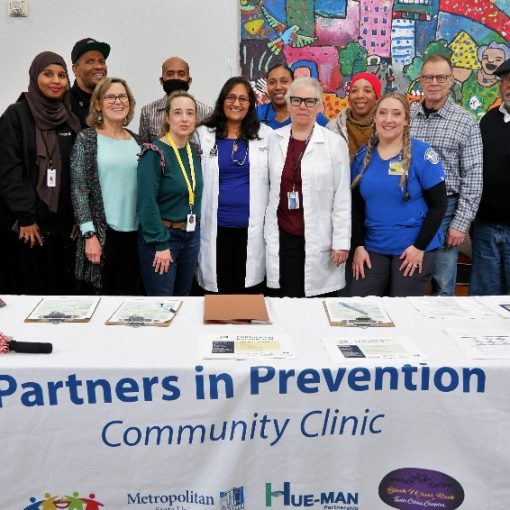
American Public Health Association Conference, November 12-15, 2023
by Robin Evans-Agnew, RN, PhD


Prologue: “Love, if understood as action, calls forth response and Responsibilities”1
I came to this meeting as a Public Health Section Member,
as an immigrant from Wales,
coming into the story of my Responsibilities
as a cis-gendered man nurse, school nurse,
exploring environmental justice with other
immigrants and children, and
nurses from around the world
Investigation2: “Our collective networks are ecological”3
We stayed until the end of the conference
To hear Dr. Vera speak
Of lessons for nurses who choose
The path to Planetary Health
Of Tsm’syen & Yaqui First Nations,
Her words wove a millennia
of nursing knowledge into the now
“Our collective networks are ecological,” she said.
I, white settler, writing this down
am moved to think of all of my relations:
Welsh hillside, bog, and beach
Down the lane
My fathers crinkled hands
Holding the orchid still,
so that I might see
Negotiation: “We cannot solve the problems of climate change
with the same systems that created them”3
Lavinia Dock and Isabel Hampton Robb plotting
out Materia Medica4 for nurses should have listened to Dr Vera.
What I learned at Hopkins
Was not Dock’s political ardor,
but separation/disconnection.
The environment, was outside
Not inside, not permitted to be
Regenerative
But if I had really listened to Dock,
and followed her back to Henry Street
and if I had
embraced the radical imagination of Emma Goldman5
I would have realized, that we
are still not free
to be nurses for the Planet
In Welsh there are two words for landscape
Tirlun to look at
Tirwedd to be within
My mother and father as botanists & ecologists,
Spoke to me about this:
“Plants are strange and wondrous beings”6
Action: “Violence in Mother Earth is violence on women”2
And now I am wading through the violence
of extraction in docklands of my home town
Tacoma, Land of the Puyallup Tribe of Indians
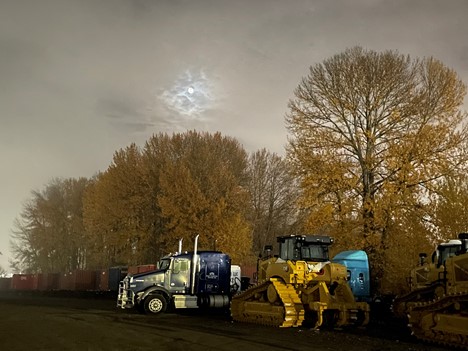
Our nights are lit by burning flares
Our days endure the clamor of import/export
Our histories replete with stories
of detention, conviction, eviction, extraction7
I remembered Dr. Vera’s elegant defense of Mother Earth anew
– violence on Her is violence on women
And I grieve my failure to protect a woodland
in the heart of this chaos
And I struggle to justify this as the point of
nursing action
Climate justice, as we envision,
And endorse, as Public Health Nurses8
lifts up the justice issues of our time
These are multispecies justice issues:
The social, racial, and economic violences
that bring despair, ecocide, genocide,
a warming earth, overburdened with aerosols,
rapidly acidifying oceans lapping land
irrevocably changed by erosion and erasure
That can only be addressed
Through solidarity with those under threat
Recovery: “Climate justice principle 36: Grow environmental consciousness
through transformative experiences in
embodied land-based, art-based,
storytelling, drumming, and dancing”9
Last night in despair
At the failures of my making,
At the conflicts and the silencing of voice;
I joined a vigil for hunger strikers
Outside the for-profit detention center,
that houses climate migrants,
encamped upon the clams and mud
of the Tacoma tideflats
on Stolen land
And the moment my feet touched the ground
Standing in a circle on this frontline with friends
Stamping out a drum beat through the soil
So that those caged and hungry inside might hear –
singing “Chinga la Migra!”
I knew I was home again.
I found recovery through regeneration,
The tirwedd of song and dances of resistance stamped into the soil
– just enough recovery, – just enough love as action
to resume the long struggle
towards a revolutionary future for nursing,
for the fierce urgency of climate justice.
…and don’t stop me from singing and drumming
Because if I cannot sing and drum,
then I too cannot be part of this revolution.
Epilogue: 100 years of Investigation, Negotiation, Action, and Recovery
“Climate Justice Principle 15. Advance environmental health, Planetary Health, and human rights
in nursing, public health, and healthcare education systems”9
Our Planet cannot heal without peace
Our allies stood up for human rights at the meeting in Atlanta
Passing in the waning hours of the third day
A call for ceasefire in Gaza
Whittled down to one, poetic sentence.10
One of our members who witnessed the turmoil
recounted the ordeals of its crafting:
grief, gratitude, pain, unity
It is to me a bleak but insistent call for peace,
within a burning war machine11
Dr. Vera said, “Our collective networks are ecological”
and I guess I see how
the unity of our collective networks under threat,
is a step towards engagement
with these ecologies of power.
Acknowledgements:
The inspiration for this poem arises out of the great public health nurses I know: Stephen Padgett, Kia Skrine Jeffers, Jessica LeClair, Alex Dudek, Rose Atkinson, De-Ann Sheppard, Janeile Luebke, Katie Huffling, Lisa Campbell, Cara Cook, Doriam Camacho Rodriguez, Mary Joy Garcia Da, Beth Schenk, Jennifer Fricas, Denise Drevdahl, Ruth McDermott-Levy, Jenn Morin, Rita Munley-Gallagher, Sheila Stone, Julie Postma, Doris Boutain, Lori Edwards, Gina Alexander & June Strickland.
Footnotes
1Sheppard, D-A. M. (2020) p.55. Getting to the Heart of Cultural Safety in Unama’ki: Considering kesultulinej (Love). Witness: The Canadian Journal of Critical Nursing Discourse, 2(1) 51-65.
2The four strategies of organizing: investigation, negotiation, action, and recovery; as described in several talks given by Reverend Lawson, who organized non-violent actions with Martin Luther King: Lawson, J. M. (2022). Revolutionary Nonviolence: Organizing for Freedom (1st ed.). University of California Press. https://doi.org/10.2307/j.ctv2j6xfhm
3Vera, M. (2023). Planetary health for public health professionals: an Indigenous perspective. APHA Climate Change and Health Equity Lecture, PHN Section. Wednesday November 13. See also Redvers, N., Celidwen, Y., Schultz, C., Horn, O., Githaiga, C., Vera, M., Perdrisat, M., Mad Plume, L., Kobei, D., Kain, M. C., Poelina, A., Rojas, J. N., & Blondin, B. (2022). The determinants of planetary health: An indigenous consensus perspective. The Lancet Planetary Health, 6(2), e156–e163. https://doi.org/10.1016/S2542-5196(21) 00354-5
4One of the first nursing texts was written by Dock and Robb at Johns Hopkins. Garofalo, M. E., & Fee, E. (2015). Lavinia Dock (1858-1956): picketing, parading, and protesting. American journal of public health, 105(2), 276–277. https://doi.org/10.2105/AJPH.2014.302021
5Connolly C. A. (2010). “I am a trained nurse”: the nursing identity of anarchist and radical Emma Goldman. Nursing history review, 18, 84–99. https://doi.org/10.1891/1062-8061.18.84
6Wilson, J. B., Agnew, A. D. Q., & Roxburgh, S. H. (2019). The nature of plant communities. Cambridge University Press.
7Evans-Agnew, R. A. (2023). Climate justice is environmental justice: Public health nursing photovoice research for multispecies justice in the Port of Tacoma. Oral presentation, PHN Section. APHA Annual meeting November 12, 2023
8In 2021 the PHN Section participated with APHN in an international nursing effort led by ANHE to determine a Global Nurse Agenda for Climate Justice and present it at the global conference on climate change COP 26 in Glasgow, November 2021. The original Agenda can be found on the ANHE website: https://envirn.org/climate-justice-agenda-for-nursing/
See also PHN Scope and Standards #17, & LeClair, J., Evans‐Agnew, R., & Cook, C. (2022). Defining climate justice in nursing for public and planetary health. American Journal of Public Health, 112(S3), S256–S258. https://doi.org/10.2105/AJPH.2022. 306867
9Evans-Agnew, R., LeClair, J., & Sheppard, D.-A. (2023). Just-relations and responsibility for planetary health: The global nurse agenda for climate justice. Nursing Inquiry, e12563–e12563. https://doi.org/10.1111/nin.12563
10APHA policy statement on ceasefire for Israel and Gaza conflict November 12, 2023. https://www.medpagetoday.com/publichealthpolicy/publichealth/107429 “In light of the continuing escalating of civilian casualties in Gaza and Israel and the collapse of the healthcare infrastructure in Gaza, APHA calls upon President Biden and Congress to urgently demand an immediate ceasefire and to call for de-escalation of the current conflict by securing the immediate release of the hostages and those detained; the restoration of water, fuel, electricity and other basic services; and the passage of adequate humanitarian aid to the Gaza Strip.”
11Lin, H.C., Buxton, N., Akkerman, M., Burton, D., de Vries, W. (October 2023), Climate crossfire: how NATO’s 2% military spending targets contribute to climate breakdown, Transnational Institute http://www.tni.org/climatecrossfire
Robin Evans-Agnew RN, PhD, is an associate professor in the University of Washington School of Nursing and Healthcare Leadership where he teaches public health nursing, leadership and followership, and environmental justice. Robin is a member of the PHN Section of the American Public Health Association.